Learning Mathematics
Show why a fraction’s denominator does not add when the parts match
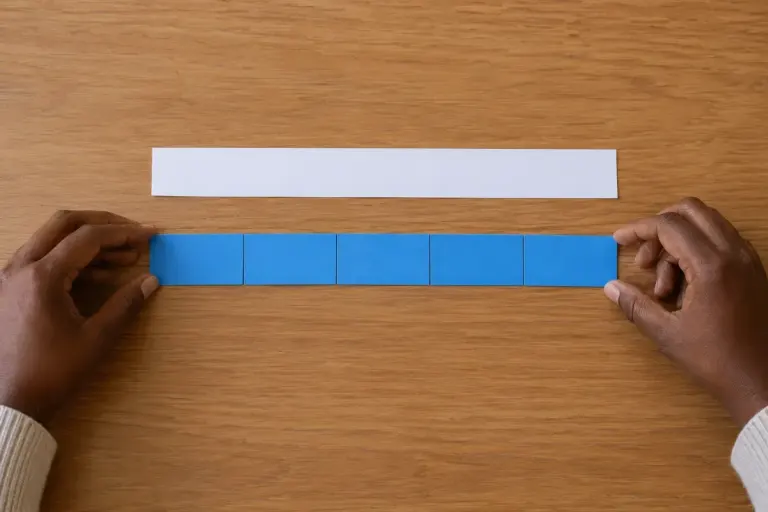
Use equal paper strips to explain addition with matching denominators, showing that the number of pieces changes while the size of each piece stays the same.

Learning ideas for students, families and educators.
Use equal paper strips to explain addition with matching denominators, showing that the number of pieces changes while the size of each piece stays the same.

Connect subtraction to the distance between numbers, then use a number line to explain why subtracting a negative increases the result.
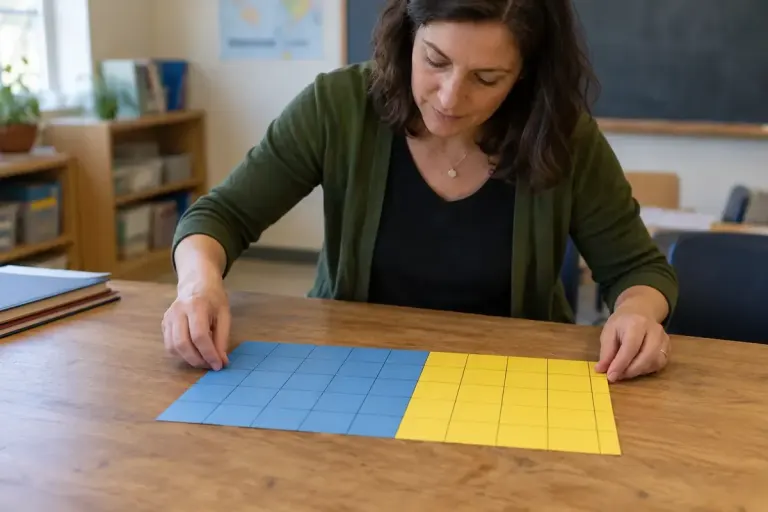
Use a split rectangle to explain the distributive law, connect the picture to arithmetic and reveal common mistakes without relying on a memorised slogan.

Explain the zero exponent through a pattern of division, while keeping the nonzero-base condition visible and avoiding the idea of multiplying by zero.
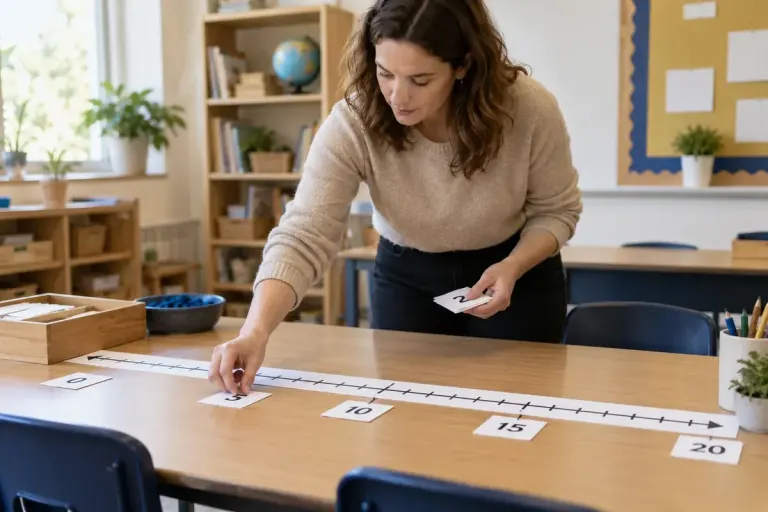
Use a multiplication pattern and the distributive law to understand why a negative multiplied by a negative gives a positive result.

A run of heads does not make tails due on the next independent toss. Use a small classroom example to separate a sequence from the next event.

Square units measure area and cubic units measure volume. A small box example helps learners connect the notation to what is being counted.

Build a ratio table from repeated groups, keeping both quantities in proportion instead of adding the same number to each side.

Trailing zeros after a decimal can change its written form without changing its value. Use place value to explain why 0.5 equals 0.50.