Everyday Mathematics
Why a triangle’s angles add to 180 degrees on a flat surface
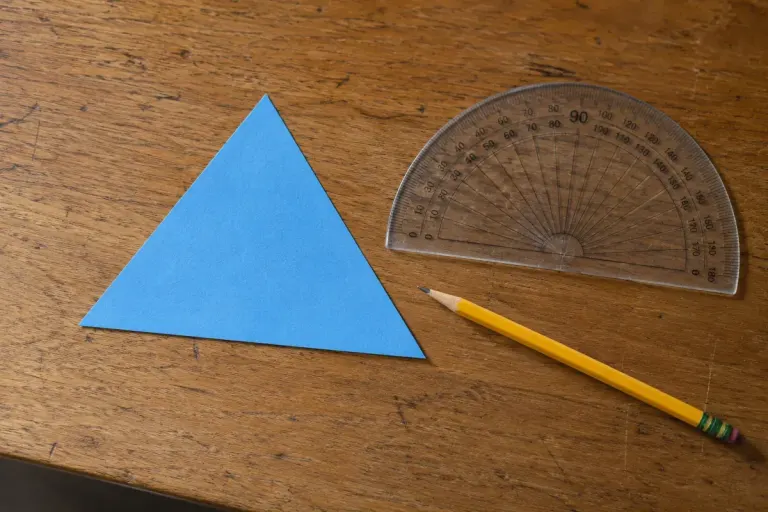
Use a paper triangle to explore the 180-degree angle sum, then connect the observation to a parallel-line argument that explains why it works.

Learning ideas for students, families and educators.
Learning ideas for students, families and educators. Explore focused guides, useful examples and questions worth asking.
Explore a study habit →
Use a paper triangle to explore the 180-degree angle sum, then connect the observation to a parallel-line argument that explains why it works.
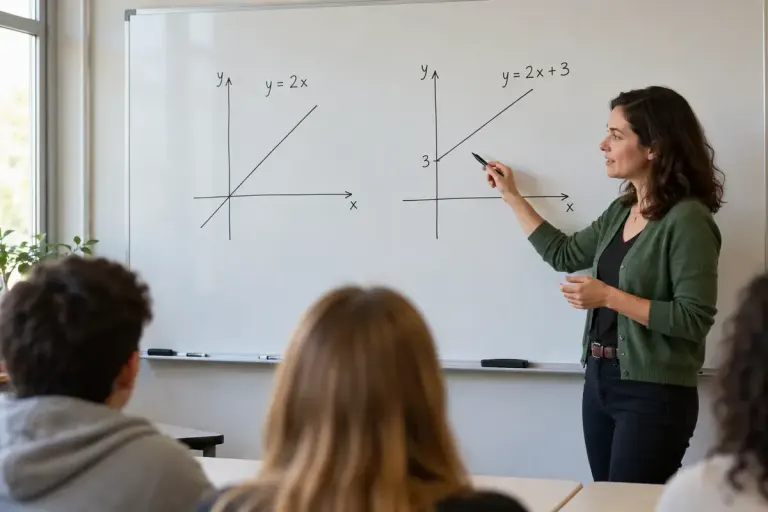
A proportional relationship has a constant ratio and a graph through the origin. Compare two simple pricing examples to see why a straight line is not enough.

Use paper shapes to distinguish turning symmetry from mirror symmetry and explain why one test does not replace the other.
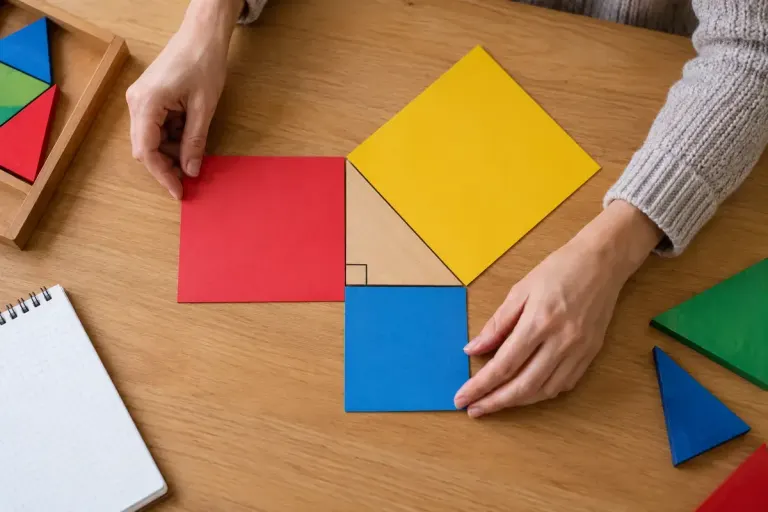
Use the right angle to identify the hypotenuse before applying Pythagoras’ theorem, with a worked example and a check for common mistakes.
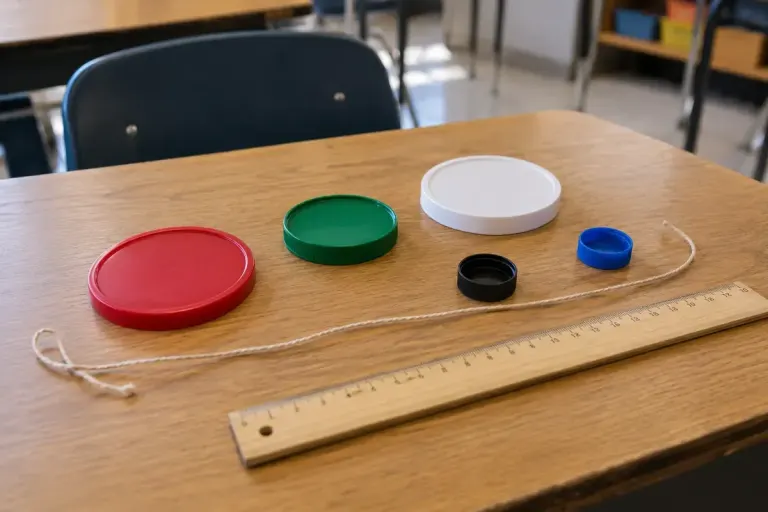
Compare circular lids to see why circumference divided by diameter approaches the same number. A practical activity separates pi from measurement error.
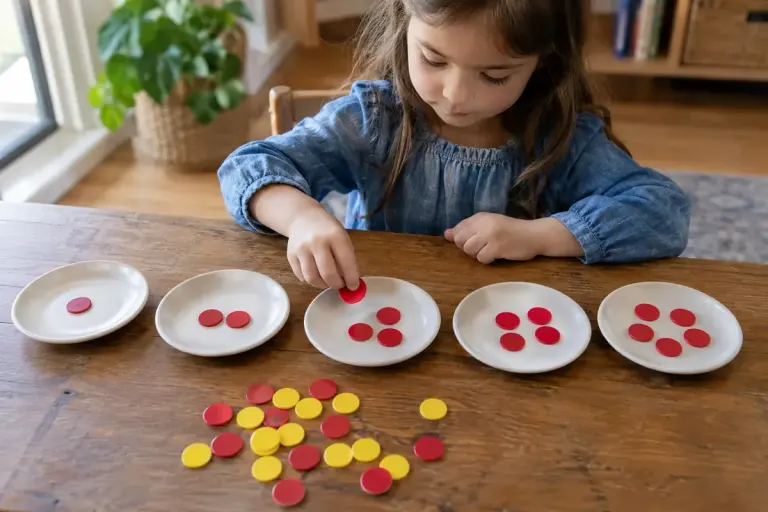
Use multiplication and equal groups to explain why zero divided by five is zero, while division by zero has no defined answer in ordinary arithmetic.