
A coin lands heads four times. Someone announces that tails must come next to balance things out. It is an understandable story, but it is not how independent tosses of a fair coin work.
OpenStax’s statistics definitions explain independence through probabilities: learning that one event occurred does not change the probability of the other. In the usual fair-coin model, the next toss still has a one-half chance of heads and a one-half chance of tails.
Ask which question the class is answering
“What is the chance of five heads before we begin?” is different from “What is the chance of heads next, after four heads have already happened?” The first asks about a complete sequence. The second asks about one remaining independent event.
For five specified heads in a row, the model gives one-half multiplied by itself five times, or one in thirty-two. After the first four results are known, they are no longer uncertain future events. The next toss still has two equally likely outcomes under the model.
Try a short prediction activity
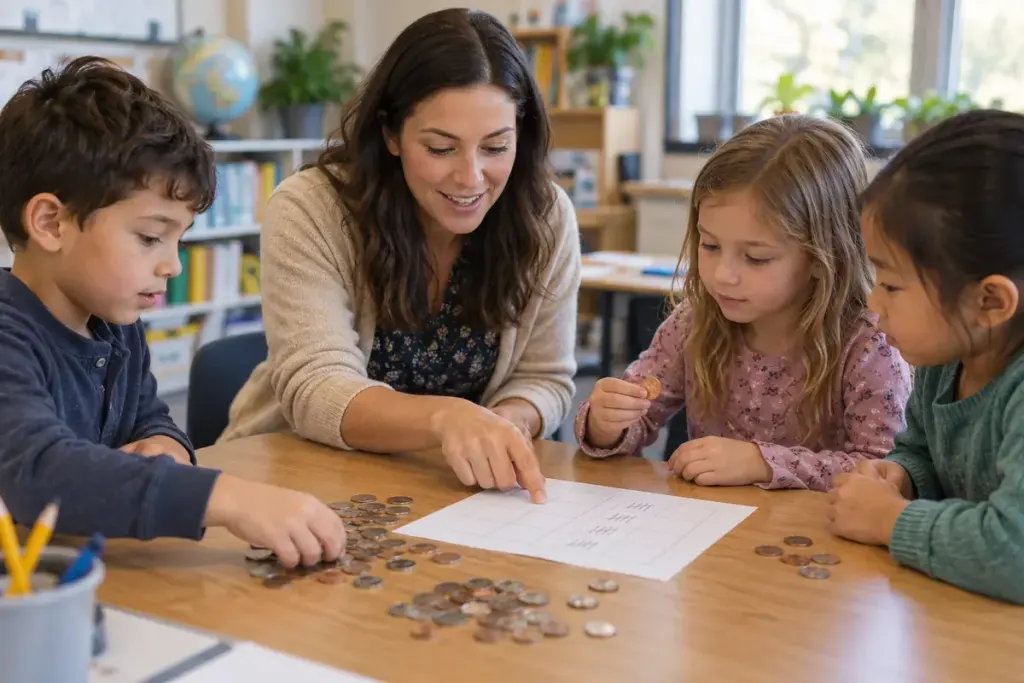
Before each toss, have learners write a prediction and a reason. Record the result without changing the earlier explanation. After several rounds, discuss statements such as “tails is overdue” and “heads is on a streak.” Neither statement changes the next probability in an independent fair-coin model.
Keep coins away from very young children and use suitable counters or a teacher demonstration where needed. The activity is for understanding probability, not for betting.
Finally, distinguish the mathematical model from an unknown physical setup. A biased coin or a non-random tossing method may not fit the assumptions. A short run alone does not prove bias, but the assumptions should remain visible.
The useful lesson is not that patterns never occur. Short runs occur naturally. It is that an observed pattern does not automatically create a force that makes the next independent result compensate for the past.