
A learner sees 4 + 3 = and writes 7. That is correct, but the familiar layout can encourage a narrow habit: reading the equals sign as “write the answer next.” A different layout helps reveal what the symbol actually expresses.
In an ordinary arithmetic statement, the equals sign says that the expressions on both sides have the same value. The calculation can appear on either side, or on both.
Try three small examples
- 7 = 4 + 3. Ask whether reversing the familiar arrangement changes its truth. Count seven objects and compare them with a group of four plus a group of three.
- 4 + 3 = 5 + 2. Build both sides with counters. The written expressions differ, but each totals seven.
- 4 + 3 = 5 + □. Ask what belongs in the box and why. Encourage comparison of the whole sides rather than putting seven into the blank automatically.
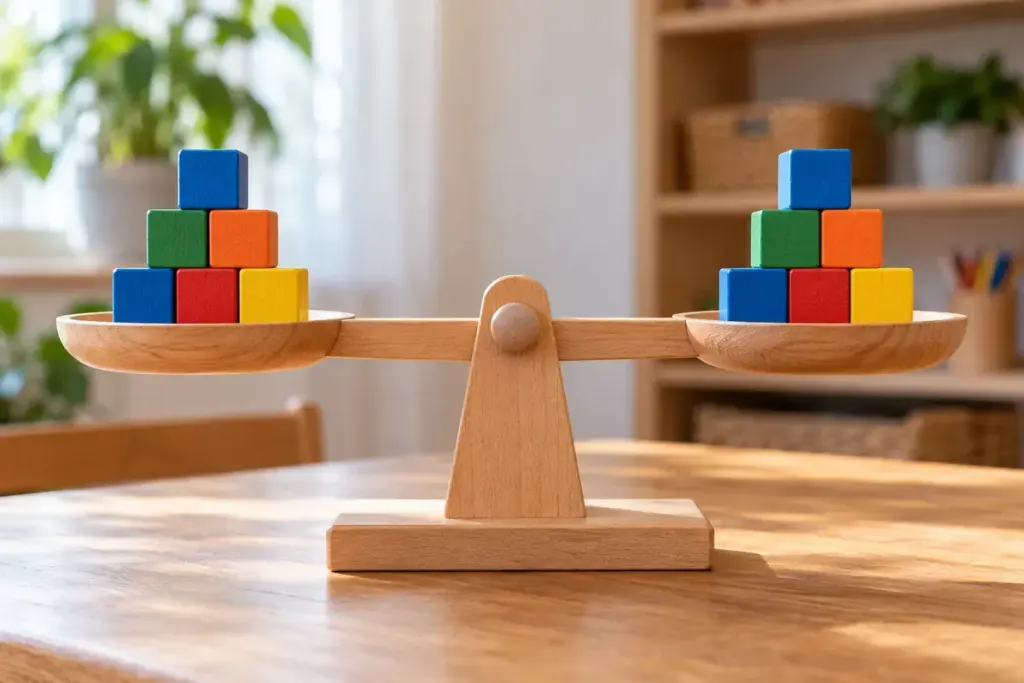
Use objects large enough to handle safely for the learner’s age. Arrange the groups clearly, leaving a visible gap between the two sides. A simple balance image can introduce the idea of equality, but explain that the arithmetic comparison concerns value rather than the physical weight of unlike objects.
Listen to the explanation
Ask the learner to read a complete statement aloud using “has the same value as.” If they give an unexpected answer, invite them to show how they interpreted the line before correcting it. The explanation reveals more than a marked cross.
Include a false statement, such as 4 + 3 = 8, and ask how to repair it. More than one repair is possible: changing the right side or changing a number on the left. Discuss why each chosen repair works.
Keep the activity short and return to varied layouts later. The goal is a flexible understanding of equality that remains useful when arithmetic grows into algebra.