
When a learner writes one fifth plus two fifths as three tenths, the error is understandable: both visible numbers seem to invite addition. A concrete model can show why the bottom number has a different job.
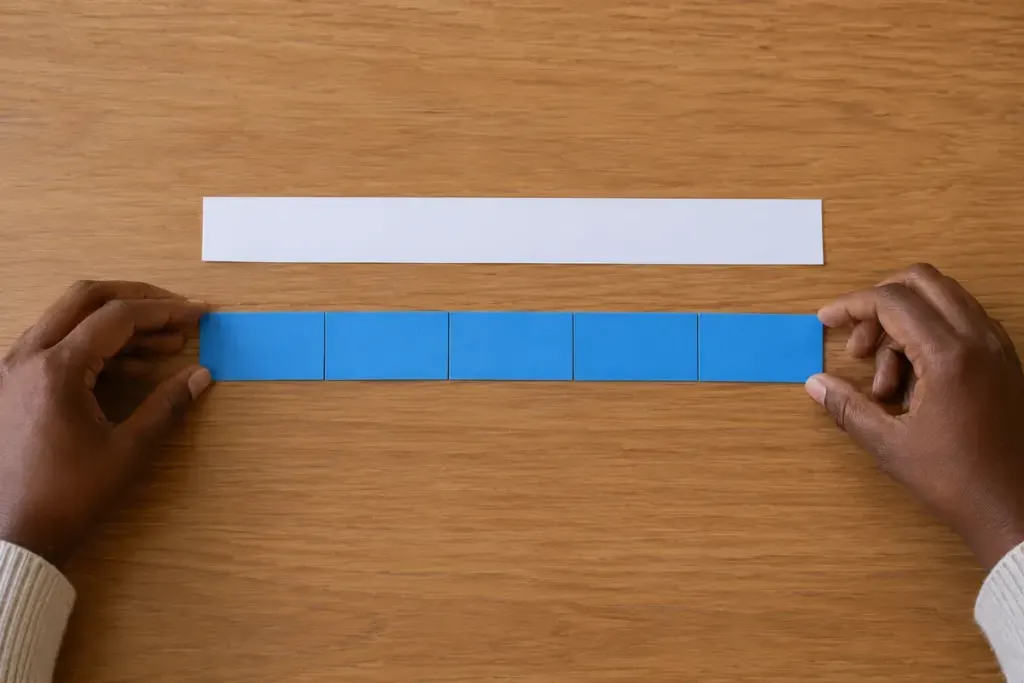
Prepare a paper strip divided into five equal parts. Keep another identical whole strip nearby as a reference. The equality of the pieces matters; roughly drawn sections of different sizes can obscure the idea you are trying to explain.
Count pieces without changing their size
Place one fifth-sized piece on the table, then add two more pieces of the same size. Ask how many pieces are present and what fraction of the original whole each piece represents. There are three pieces, and each is still one fifth.
Write 1/5 + 2/5 = 3/5 beside the arrangement. Explain that the numerator counts these equal parts. The denominator identifies the division of the whole that gives each part its size. Bringing pieces together has not cut the whole into ten parts.
Test the tempting wrong answer
Use a second, equally sized strip divided into ten equal parts. Compare three tenths with the three fifths already on the table. The difference is visible because the tenths are smaller pieces. Keep both whole strips the same length so the comparison is fair.
Ask the learner to describe the difference in their own words before giving another calculation. A phrase such as “we added more fifths” shows more understanding than reciting “keep the denominator.”
Extend only after the idea is secure
Try another sum with matching parts, including one that makes a whole, such as two fifths plus three fifths. Then invite the learner to create a question for someone else and explain the model.
Different denominators require a further step because the pieces do not initially match. Avoid introducing that procedure too quickly. First establish the useful principle: addition counts equal-sized fractional units, and the written answer should preserve what those units are.