
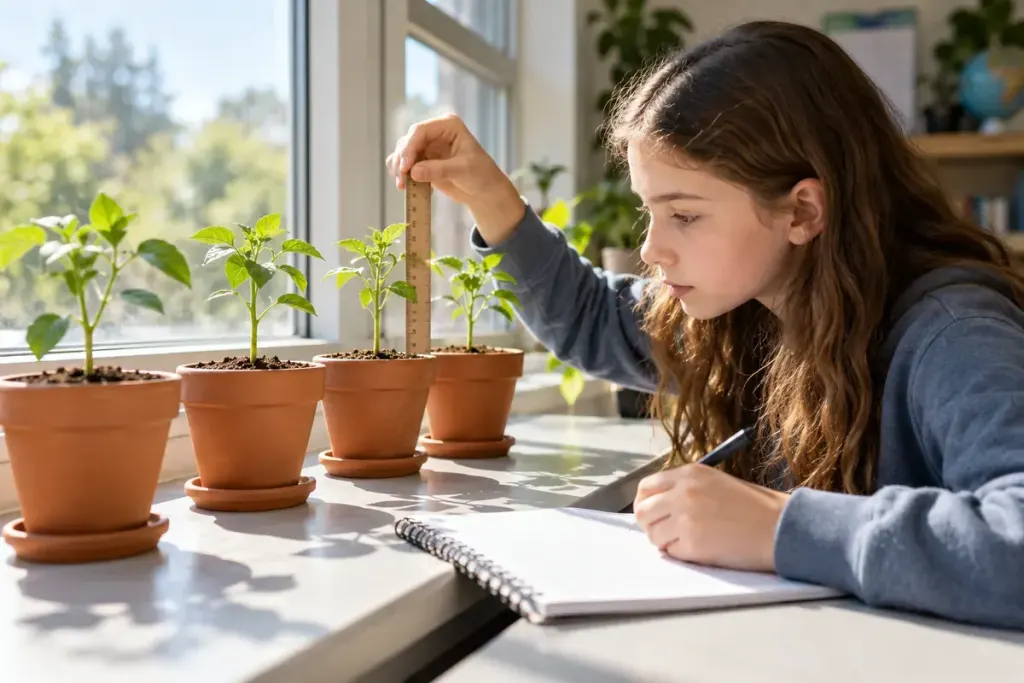
Two plants sit on a windowsill. One receives more water and grows taller. Did the extra water cause the difference? Perhaps—but if it also started taller and stood closer to the light, the comparison cannot isolate that explanation.
Write the question before collecting results
A manageable question identifies what you will change and what you will observe. For example: “Under the conditions of this classroom investigation, how does the planned watering amount relate to the change in plant height?” Your teacher should help choose a safe, suitable setup and an appropriate measurement period.
List the conditions you intend to keep comparable: plant type, starting size, pot, growing medium, position and observation method. Some cannot be made perfectly identical. Record those limits instead of pretending that a classroom experiment controls everything.
Measure change from a starting record
Record each plant’s initial height using the same reference points. At the next observation, use the same method. Comparing growth from the starting measurement is more informative than looking only at the final tallest plant.
Give each pot an identifier and record the date. If a plant falls over, a watering is missed or the pots are moved, put that in the notebook. An unexpected event belongs in the evidence, even when it makes the result less tidy.
Leave room for an uncertain result
One plant in each condition is a very limited comparison. Replicates, where practical and teacher-approved, can reveal how much variation exists within the same treatment. Do not turn a small classroom observation into a universal gardening rule.
Before the project begins, sketch the table you will need: identifier, initial measurement, later measurement, change and observation notes. If you cannot imagine how to record the answer, the question may still be too broad.
A strong science-fair explanation can say, “This pattern appeared in our small test, but these differences may also matter.” That is not a weak conclusion. It shows the reader what the investigation can support and what a better follow-up would need to examine.