
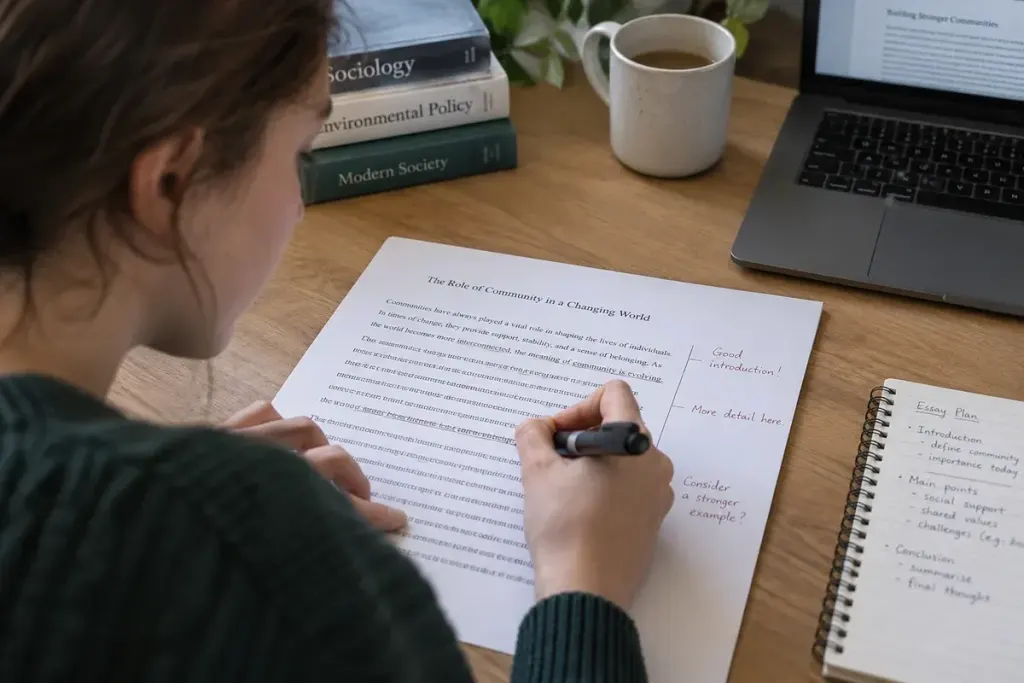
A page covered in comments can look like progress even when the student does not know what to change. Feedback becomes useful when it leads to an action the learner understands and can attempt.
Start by choosing one important comment rather than trying to fix everything at once. If the instruction is unclear, ask for an example or a more specific explanation. “Explain your evidence” is easier to act on when the student can identify which sentence needs that explanation.
Rewrite a small section yourself
Take a paragraph, calculation or short answer and make the revision without having someone else supply the finished version. Keep the original nearby. Comparing the two makes the change visible and creates a chance to explain why the new version works better.
The Education Endowment Foundation’s guidance on teacher feedback emphasises feedback that supports learning and pupils’ use of it. The routine here is a practical way to create space for that use, rather than treating comments as the end of the task.
For example, a student may have stated an opinion without connecting it to evidence. The revision could add one relevant detail and explain how it supports the point. The improvement is the connection, not simply a longer paragraph.
Check the reason, not just the correction
Ask the learner to describe what changed in a sentence of their own. If they can only say “the teacher wanted it,” the underlying idea may still be unclear. A brief conversation can reveal whether the revision was understood or copied mechanically.
- Which comment are you working on?
- Where will you make the change?
- How does the new version address the problem?
- Where could you use the same idea next time?
Then try a short new example. Improvement on the original page is encouraging, but applying the idea elsewhere gives better evidence that learning has transferred. Keep the new task manageable so the focus remains on the skill being practised.
Parents and helpers can support the process by asking questions and allowing thinking time. Replacing the student’s answer with a polished adult version may improve the page while hiding what the student can do. One understood revision is a stronger starting point than many corrections that remain someone else’s work.